

News
CavBot Arcade
Lab
CavBot Arcade evolves into recovery intelligence
A beautiful error page is nice. A system that learns how sessions recover is better — and that’s exactly what the Lab is becoming.
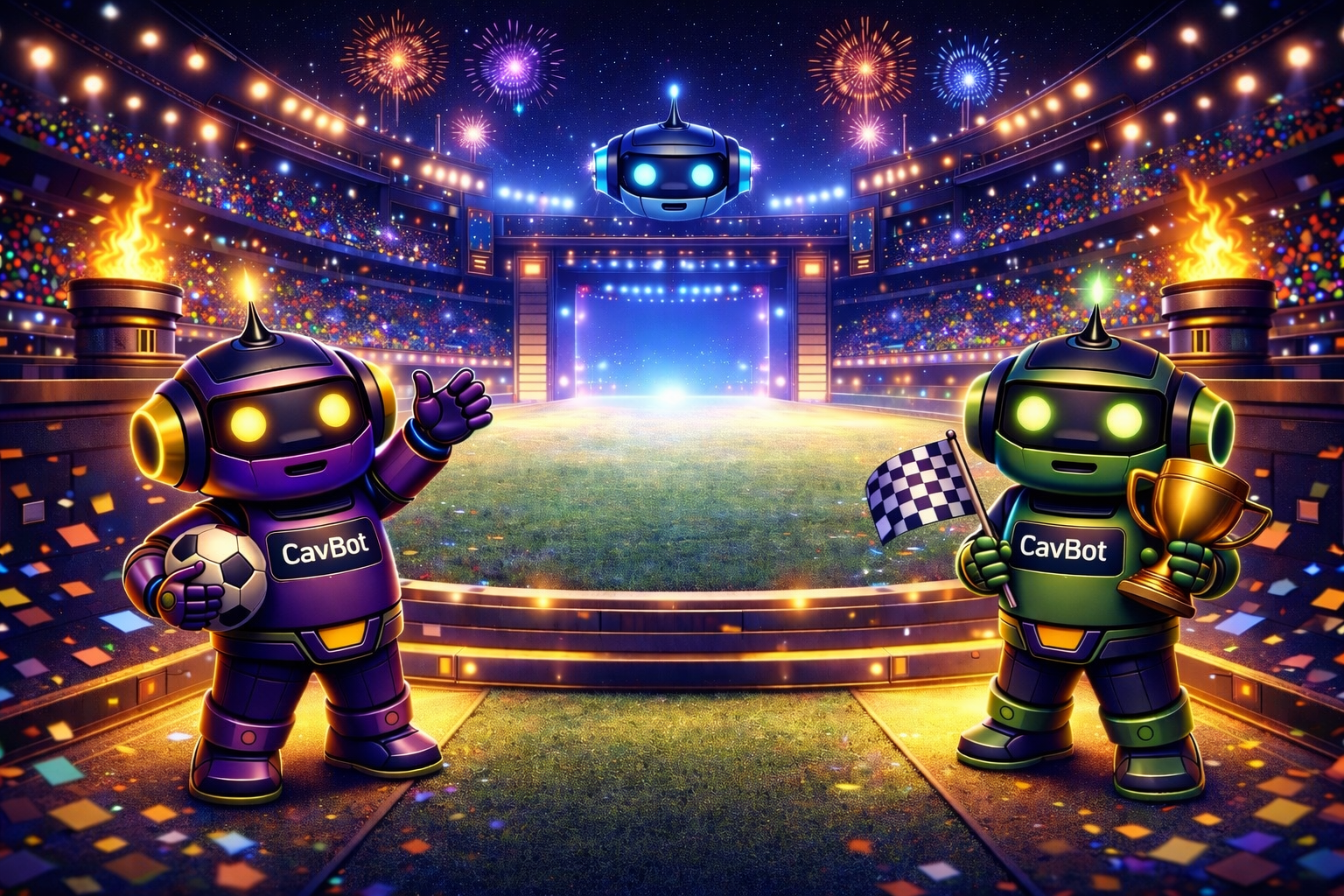
This started the way most “fun” product moments start: Cavendish wanted to ship a 404 experience that didn’t feel like a dead end. Not a generic apology screen. Not a bland redirect list. Something alive — interactive, polished, memorable — the kind of page that makes a user feel like the product still has a heartbeat even when they hit the wrong door.
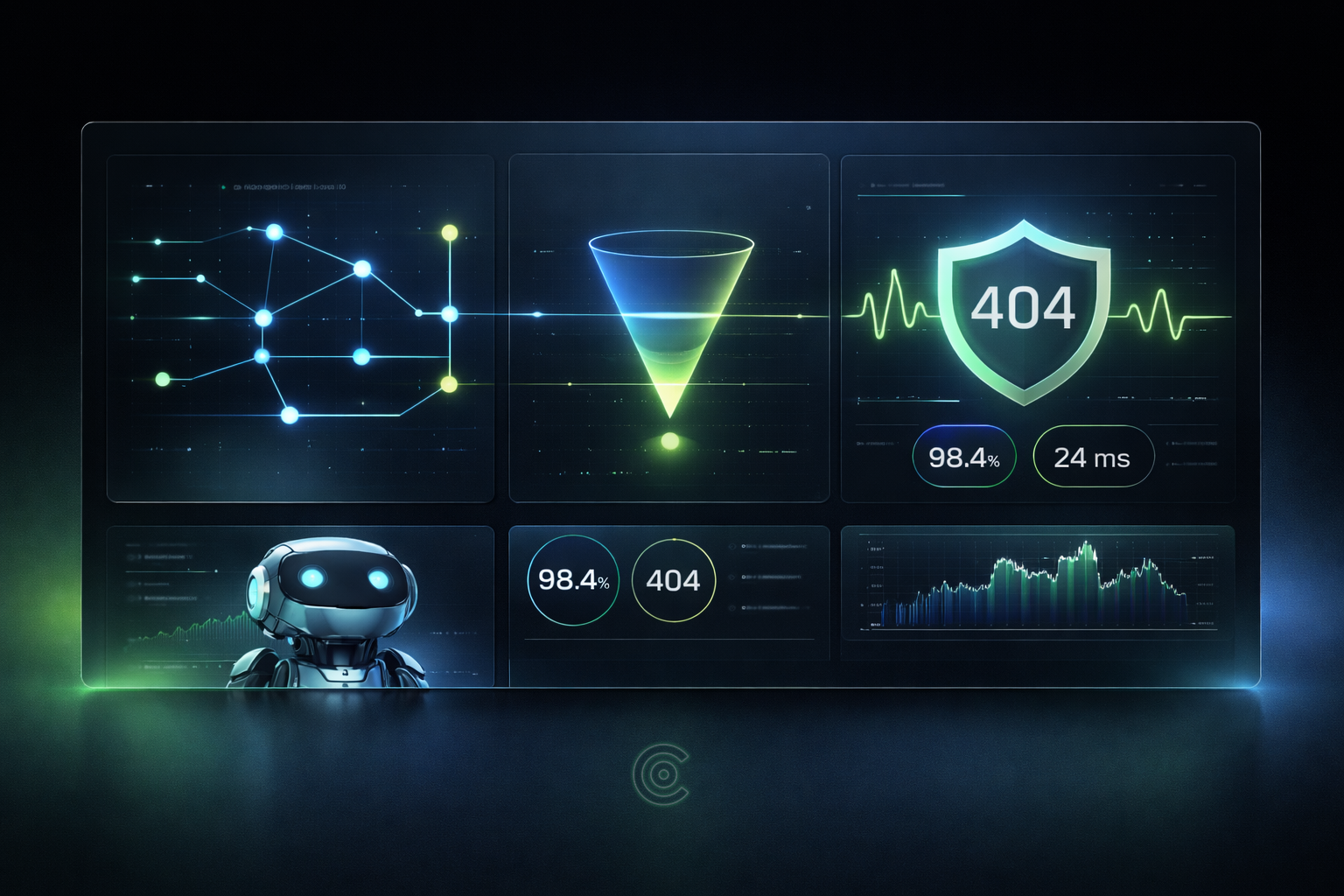
The first Arcade Lab builds did what they were supposed to do: they were fully playable games with sound, motion, and a calm command-surface feel. But the bigger realization arrived fast: a 404 isn’t just a design moment. It’s a measurable event — and the behavior that happens after it is a map of trust.
The shift:
Cavbot Arcade stopped being “just a fun 404.” It became a proving ground for recovery intelligence — a place where CavBot can learn what
sessions do after a miss, and how experiences should guide people back to intent.
From arcade to instrument
Cavbot Arcade is built with the same discipline as the rest of the CavBot surface: clean UI, predictable inputs, and controlled states. That matters because it means the experience can be measured without being chaotic. Every interaction is a signal: where a user looks, what they click, how long they stay, whether they recover — or bounce.
- Recovery behavior becomes visible (exit vs re-engage vs search).
- Navigation intent becomes traceable (where people try to go next).
- Experience trust becomes measurable (does the product feel broken, or handled?).
Why a “fun” 404 is actually serious
Most teams treat 404s like cleanup: fix broken links, add a redirect, move on. CavBot treats 404s like early-warning systems. Because when a user hits a 404, it’s rarely random — it’s usually a broken promise: a shared link, a stale route, an internal nav drift, or a product surface that changed without guardrails.
Cavbot Arcade turns that moment into something different: it keeps the user in the experience, gives them a path forward, and (quietly) allows the platform to learn how recovery really happens. This is how “a cool 404 page” becomes reliability intelligence.
CavBot definition of a strong 404:
not “pretty,” not “funny,” not “clever.” Strong means recoverable. Strong means guided. Strong means measurable.
Sound, motion, and the “runtime feel” layer
Cavbot Arcade is also a testbed for runtime feel — the layer users remember. The same way a game reveals latency, stability, and responsiveness, the Lab reveals what the product feels like under real interaction. Micro stutters, slow input, awkward transitions — these are not design flaws, they are reliability signals.
- Input responsiveness shows whether the surface feels stable.
- Audio cues become feedback loops (quiet, intentional, not noisy).
- Session continuity keeps the user inside the product story.
What ships next
Cavbot Arcade will continue to expand as a controlled environment for learning. Expect tighter recovery pathways, stronger “return to intent” routes, and cleaner ways to connect the moment of failure to the surfaces that matter: Product, Pricing, Command Center, and support guidance.
Coverage inquiries: pr@cavbot.io